Aphorisms by Charles R. Castle

After retiring from a career in healthcare and becoming “a rather late in life poet,” Charles R. Castle developed a fascination with aphorisms during the pandemic, a fascination fueled by W.S. Merwin’s translations in Asian Figures and his Voices of Antonio Porchia (see The World in a Phrase, pp 217-220). Charles included about 100 of his aphorisms as the final chapter of his poetry collection, On the Beach of Borrowed Time. “I’ve found my aphorisms to be an effective change of pace to add to a poetry reading,” Charles says. “The shorter book has also been a way for me to make a political response to current events. I sell or give them away at marches and street protests. We are living in historically interesting times. If nothing else, my great grandchildren will know I made some small effort to express my opposition to the insanity we are witnessing and perhaps I will encourage them to do the same in the future. Why else do we write?” Here is a selection of Charles’s “Aphorisms for an Absurd World”…

You can’t write the book of your life standing in the margins

The straw that broke the camel’s back was carried on the wind

The most precious gifts are rarely wrapped

Old ideas may kill us with new weapons

Judge us by how we treat the weak

not by how we arm the strong

What doesn’t kill you just needs more time

An eye for an eye and a tooth for a tooth

costs and arm and a leg

Less road rage on the road less traveled


This week in The World in a Phrase V

Thanks to Neil Denny for such a fun, wide-ranging conversation on the Little Atoms podcast, largely structured around consideration of individual aphorists from the book, including Jesus (12:00-14:50), Jean Toomer (20:00-22:05), Emily Dickinson, Dorothy Parker and Samuel Hoffenstein (24:15-26-35), and Sarah Manguso (28:30-30:30), among others.

And thanks to Jacke Wilson at The History of Literature podcast for an equally fun, wide-ranging conversation featuring a discussion of aphorisms as mnemonic devices for intense experience (14:30-16:00) and aphorisms as rhetorical devices (28:10-32:50) and also, coincidentally, largely structured around consideration of individual aphorists from the book, including Confucius (34:30-36:50), Montaigne (37:00-39-25), and E.M. Cioran (39:40-43:45).

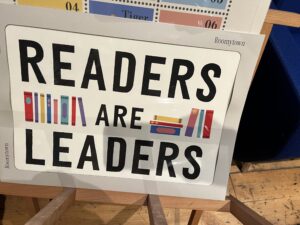
For an excellent exploration of aphorisms as expressions of political dissent and social critique, check out The Londoner’s profile of Nick, who hangs billboards with aphorisms and aphorism-adjacent slogans on them from the balcony of his second-floor flat near Finsbury Park station. Each of Nick’s signs, Roland Hughes reports, “always have a phrase painted on it, [are] always nearly a metre high, always in bold, black-on-white sans-serif lettering. When it comes to his messages, Nick has a few rules. They will contain a pithy, usually three- or four-word slogan. They will usually hint at a deep distrust of authority and, to put it politely, the way information is distributed. There will be common themes: war, protest laws, surveillance, the media. Nick’s favourites, he says, are ‘ones that question the narratives; the acceptance of which, let’s face it, has got us into a terrible state.’”

Some of Nick’s posts include…

WHICH LIES DO YOU BELIEVE?

EXPECT ANOTHER FALSE FLAG PSYOP

MAKE THE SKY BLUE AGAIN

REGISTER YOUR CHICKEN

Nick’s work is a great example of the aphorism as public art, appropriating the language and distribution methods of advertising to make political statements, as artists like Jenny Holzer and Barbara Kruger have been doing since the 1970s.

Aphorisms by Vincent Straub

One of the things that’s most fun about doing book talks is hearing all the aphorisms people share with me before, during, and after the talks. After a recent talk, Vincent Straub, a university student, handed me an envelope that contained a selection of his aphorisms, which are sharp, funny, and have the philosophical twist we spent some time discussing during the talk. Here are a few of his sayings…

Those who do not want to live together will die together.

In today’s world, nothing is as present as absence.

Our best political friendships are with those with whom we share the same level of confusion.

Heaven is a dance floor with bookshelves.

In an email exchange with Vincent, I suggested he might want to revise some of his aphorisms after writing them. As someone who typically practices the ‘spontaneous combustion’ method of aphorism composition, I need to hear this advice myself. It might seem strange to revise a composition that’s already so short, maybe a dozen words at most. But revision is part of the writing process for works of every length; it’s not an optional afterthought or something you do when you’re ‘finished.’ For example, the ironic effect of Vincent’s

It is a marvel to grow up and watch how your parents develop

could be heightened by changing up the word choice:

It is a marvel to grow up and watch your parents mature.

The word ‘mature’ has richer connotations in this context and enhances the reversal of a child watching parents mature when usually it’s the other way around. Similarly, further refining already refined sentences like

Those who stay sitting will never feel their shackles

can make them even more pointed and powerful:

You never feel your shackles if you never stand up.

Distilling ‘stay sitting’ into ‘stand up’ adds crucial allusions to ‘standing up for yourself’ while the addition of the second person form of direct address makes the whole more definitive.

I had the chance to see the rewards of revision in my own work after rediscovering some aphorisms I had written while living in San Francisco. I noted that an early version of one saying read

I’d rather be a voice in the desert than a face in the crowd

but I revised it to

Better a voice in the desert than a face in the crowd

which is much stronger since it removes the first person reference, making the observation more outward-directed, and it changed the sentence from a preference to a directive, which prompted the composition of an aphorism about writing, which spontaneously combusted and I did not revise:

Revision is precision.

George Murray: Aphorisms as a Bridge Between Philosophy and Poetry

This is the talk delivered by George Murray at the International Aphorism Conference in Wroclaw, Poland on October 25, 2025. George is a Canadian poet, teacher, and editor. I’ve blogged about his aphorisms here and here. —JG

My talk today is about how I see the poetic aphorism as differing from the philosophical aphorism, but also how the form creates a bridge between the two intellectual endeavours. In order to get where I need to go with this, I must to give you a bit of my history with the form.

I wrote my first (intentional) aphorisms in 2008. The year before, I had been invited to speak at Princeton on Canadian Poetry, and the organizers planned a public reading for me as a poet. I was paired with James Richardson (scroll down for blog posts about Jim’s aphorisms here and here —JG), a venerable and much-beloved American poet and aphorist, and then-head of the Creative Writing program at Princeton.

I read from my recently released book of sonnets that employed an unusual form – “rhyming” ideas instead of sounds as its formal constraint. So, for instance, a word like “night” could rhyme with a synonym like “evening” or an antonym like “day” or homonym like “knight” (on a horse) or even an anagram like “thing”. This had garnered a lot of attention in the Canadian poetry world.

But it wasn’t this innovation that interested Richardson. After the reading, as Jim and I sat at a local pub, he commented on the closing couplets of my sonnets, saying something like, “Your poems often seem to end on an aphorism, as if you were writing up toward them. You should look in your journals to see if you have more little nuggets you haven’t yet put into a poem.”

Who was I to argue? Richardson was one of the few North American masters of the poetic aphorism, and at this point, I’d never even heard of them at the time. I had always thought of the aphorism as a philosophical form.

So, once back in Canada, I looked through my motley collection of scribblers and moleskins and found not dozens, but hundreds of aphorisms. These were little thoughts that had weight and depth but had somehow never found their way into a poem. In total, there were nearly 1,000 of them scattered through decades of old notebooks.

I subsequently published two books of aphorisms, Glimpse and Quick, in 2010 and 2017 respectively. Both have sold well in the Canadian book market – a market that typically doesn’t respect or value poetry as a commodity worth paying for. Canada is a place where selling 500 copies of a book of poems is considered a successful run, and I am lucky enough to sell well, but these books of aphorisms were selling more. In fact, because there is no poetry “Bestseller Lists” in Canada, my first book Glimpse made it onto the bestseller list in one paper under the “fiction” category. (I found this funny, that a book of “truths” would be listed under fiction.)

Why is this, I wondered? Why do well-crafted and thoughtful poems not spark the imagination of the public in the way aphorisms do? It’s easy to say that poetry can be difficult for those that grew up only encountering it in school, or that the form feels archaic and irrelevant to the current milieux, or even that we live in a time of sound-bites and tweets and abbreviation that already mimic the form of the aphorism, but is that truly what’s going on?

Some people, like our keynote speaker James Geary, see the aphorism also as a vehicle for delivering those philosophical “deep thoughts” to casual readers in a friendly manner.  In his interview with the Harvard Gazette dated Oct 10, 2025, James asserts that aphorisms must make you think, but that they also “have to be super accessible; you can understand them in a second.”

I see what he means, and I think I agree, but I come at the whole endeavour from another angle – a poetic one. One that is used to allusion, nuance, and multiplicity of meaning. So yesterday when James said that the aphorism must be “effortful, not effortless”, I thought, “Aha, now I see what he means. And we do agree.”

For me, poetry is, at its core, an art anyone can practice, but not all can master. Just as anyone can become an apprentice carpenter, learning the tools and tricks of that trade to plane and cut and join wood, so too can anyone become an apprentice poet, learning to hide and reveal, join and break, state and allude in order to elicit epiphany on the part of the reader. And just as with poetry, not every carpenter can go on to greatness as a fine artist in cabinet making or turning or other wood working. Most remain merely serviceable workaday craftspeople.

Even so, every person in this room, in this building, in this city, in the world, has had the experience of epiphany. A sudden dawning. A realization. A poetic moment – those moments of profundity where thoughts come unbidden about the meaning and scope of life as we know it. Maybe they’re sitting looking at a sunbeam from their window and watching the dust motes float about, and thinking, “There’s something here. Something important at the edges of my consciousness.”

The major artistic difference between them and a poet like me is, I’ve spent 30 years training myself to recognize such moments, and to capture them as quickly and elegantly, as possible.

As a poet, when I have a moment like this, I roll it over in my mind, make my hasty notes, and later, when fleshing them out, I lay down layers of craft and form.

See, the initial trick with an epiphany is to realize you’re having one. After that, it’s a race to capture its beauty and meaning before it begins to decay in your mind. A scramble to write it down as faithfully as possible but then slowing the process down to really examine it and flesh out its levels of meaning and nuance.

This is all part of the hopeful endeavour to elicit a similar epiphany in the mind of the reader, to convey my wonder and thought, and to make the poem sing. I take an idea and illuminate it, not unlike a medieval manuscript. My goals are elegance and beauty, but also a satisfying and allusive complexity. I want to create something that flows and has grace on the tongue but also offers a deeper level for those willing to explore it.

That said, I feel no special obligation to “accessibility”. I subscribe to the idea that poetry worth reading is poetry worth rereading.

In the end, the aphorism works differently for me. It arrives as a statement that immediately tells me the rest of the “poem” is unnecessary. This doesn’t mean it’s whole. It may require editing and crafting, but it can be perfected without the flourish and linguistic fireworks common to poetry. Aphorisms are worked on – pared down, added to, crafted, like a poem, but they need no poetry around them to sing. They use the tools of poetry, like metaphor, metonymy, imagery, play with idiom and cliché, etc., but they do so economically and succinctly.

A few examples (All from Glimpse, ECW Press, 2010):

Rubble becomes ruin when the tourists arrive.

As with the knife, the longer the conversation, the less frequently it comes to a point.

Anyone who yells loud enough can be famous among the pigeons.

Until quite recently, I explained aphorisms to the uninitiated as “poetic essences” – by which I mean, they are “poems without all the poetry getting in the way”. A poetic essence, I held, is a thought or epiphany or idea that requires no more elaboration than the statement itself, yet it is still a poem.

An aphorism is not always a simple thing, or an uncrafted thing, in that over time it is laboured over in equal measure to any of my poems – but it is a whole piece that requires no further lyrical exploration to convey the totality of its meaning and elegance.

In a sense, the poetic aphorism can be seen as the “core” of a poem that never was and needn’t ever be. It does the work of a poem, in that it offers the chance of epiphany to the reader willing to reach for it, but it does so in a more direct way, eschewing the layers and nuance of poetry in favour of efficiency and a more direct clarity of meaning.

A good poem, I tell my students, is one that can be read many times in many ways without losing its appeal. It has layers of meaning that reveal themselves on second, third, fourth, and so on, readings. An aphorism, I say, and as James writes, can usually gloss on the first read, meaning it gives up the goods quickly and directly.

Yet, for a poet – or at least for this poet – I have come to realize that is not entirely true. In writing aphorisms as a poet, I can’t help but concentrate on adding back in the nuance and layers of meaning while also offering efficiency and clarity.

I want my reader to grasp the idea of the aphorism on first read but find other layers as they return to it later. I want the reader to stop and say, “Huh” when coming to the piece a second time. I want the language to offer multiplicity instead of uniformity of vision, which seems somewhat antithetical to the nature of the form.

As with poetry, I don’t think requiring a reader to reread for a fuller understanding is a negative. I see it as a positive – an element that extends the value and life of the piece.

More examples (From Glimpse, ECW Press, 2010):

The body is what happens when the mind wanders.

Panic is worry on a tight schedule.

Dirt is what we heap upon enemies; loam our dead; earth our children.

This forces me to ask myself: Are my poems then just aphorisms that are overwritten? I’ve checked. Some of them are.

In many cases, you can reduce a poem to a single line or two outlining its essential meaning. Like what we call an “elevator pitch” for a poem – a direct statement against the poem’s coy play. But with most such distillations, the nuance and elegance can be lost. In the end, the poem requires poetry and poetic investigation, while the aphorism can employ the tools of poetry, but doesn’t require it.

I know this because I find that some ideas really do arrive fully formed, already an aphorism – announcing themselves as such on their way through the mind’s front (or back) door. They feel complete on arrival, even if in need of editing and craft – like flowers that skip the stage of the bulb, heading straight to petals.

In the same way a good short story can do the work of a novel in 30 pages, a good aphorism should be able to do the work of a long poem in one or two lines.

To illustrate this, in my second book of aphorisms, Quick, I even tried to take well-known longer poems and reduce them to a single thought. This resulted in varying levels of success. Many of the more spectacular failures were not included. These poems were too tangled or unsure of themselves or diverse in subject to distill.

Through this experiment I learned one can never capture all the nuance and allusion of poems of that scope in an aphorism – but one can focus on a single, pervasive idea, and craft an aphorism from it.

Examples (All from Quick, ECW Press, 2017):

TS Eliot, “The Love Song of J. Alfred Prufrock”:

The mind’s cacophony is caused by the same thing as the city’s: crowds.

Alan Ginsberg, “Howl”:

The lamb that hears the growl needn’t stick around for the howl.

Margaret Atwood, “This Is a Photograph of Me”:

In a world made of surfaces the only place to hide is in depths.

Langston Hughes, “Let America Be America Again” (A poem-to-aphorism conversion which is particularly relevant right now):

A dream’s best intentions often end up a waking nightmare.

They allude to the source poem and even sometimes illuminate it, but overall lack the levels of meaning, focusing instead on a single layer and elevating it through the exclusion of other thought.

This is important because this is how aphorisms work for me. They are indeed poems without all the poetry getting in the way, but they are also thoughts without all the thinking getting in the way.

So, in the end, the sort of aphorisms I write are not in fact distilled poems, nor are they philosophical statements. They are their own form – separate from, but owing allegiance to, both poetry and philosophy. They evoke, allude, and refer as poems do, and they also tackle thoughts with depth and metaphysical importance the way philosophy does, all in the most economical way possible, but with grace, beauty, and nuance. I would pose a new term for their relationship to poetry going forward. Instead of poetic essences, I would call them “philosophical or poetic cores” or even “poetic allies”. They are not poems, nor are they really philosophy, but for me they are, at their best, both philosophical and poetic.

Thank you.

The difference between advertisements and aphorisms

On the Tube the other day, I spotted a billboard for Heinz with the tagline:

Beanz Meanz Heinz

I liked the wordplay and the fact that the tagline is aphorism-adjacent, if not an actual aphorism. It follows almost all of the five laws of the aphorism… it’s short, definitive, has an author (the Kraft Heinz Company or its advertising agency), and it has a twist (the cacographic spelling and the slant rhyme between the ‘ea’ and ‘ei’ sounds). The one law it does not meet: It’s not philosophical. (Full disclosure: You have multiple food manufacturer options when purchasing beans.)

Advertisements, along with slogans and sound bites, do arguably espouse a kind of philosophy, one associated with a specific product or political party, for example. The philosophies they promote, however, urge homogeneity (of buying or voting patterns, at least), not the iconoclasm of the aphorism. Another crucial difference between advertisements and aphorisms is that ads are intended to induce commercial action, while aphorisms are intended to induce psychological action.

The best ads aspire to the state of aphorism; the worst are filled with a passionless vapidity.

In fact, the closer an advertising slogan comes to being an aphorism, the more effective it is. Take my favorite catchphrase of all time, a statement as profound and urgent as the ancient Latin maxim of Carpe diem, brought to us in the mid-­aughts by the good people at Müller to sell their yogurt (Full disclosure: You have multiple food manufacturer options when purchasing yogurt):

Lick the lid of life

Advertisements and aphorisms are alike in the accelerated kinds of thinking they try to encourage or subvert. A successful ad convinces you you need a specific kind of stuff; a successful aphorism, like the Müller yogurt maxim, convinces you you need to take a specific action or embrace a specific state of mind.

My Life in Fortune Cookies

After graduating from college, I moved to San Francisco, where I acquired a taste for Chinese food. The food is good, the portions are large, and back then the prices were cheap — important considerations for an impoverished recent graduate — and at the end of every meal you get a fortune cookie.

I never really liked the taste of these savories, a cross between desiccated cookie dough and a stale communion wafer. And the fortunes themselves are invariably trite and boring — “You will make a big trip” or “Success will soon be yours.” But serving up a little food for thought is the perfect way to end a meal. How much better, though, if the fortunes were actually provocative and interesting. The only solution, I decided, was to make my own fortune cookies.

After making a few inquiries, I found Golden Gate Fortune Cookies in Ross Alley, a dank, narrow lane off Washington Street in Chinatown. The firm’s fortune cookie factory was tiny — the entire workspace was about the size of a large kitchen — but this little establishment churned out a prodigious number of cookies. Cardboard boxes filled with them were stacked to the ceiling along all four walls, a tribute to the productivity of the two women who silently operated the machinery in opposite corners of the shop. I soon became a regular customer.

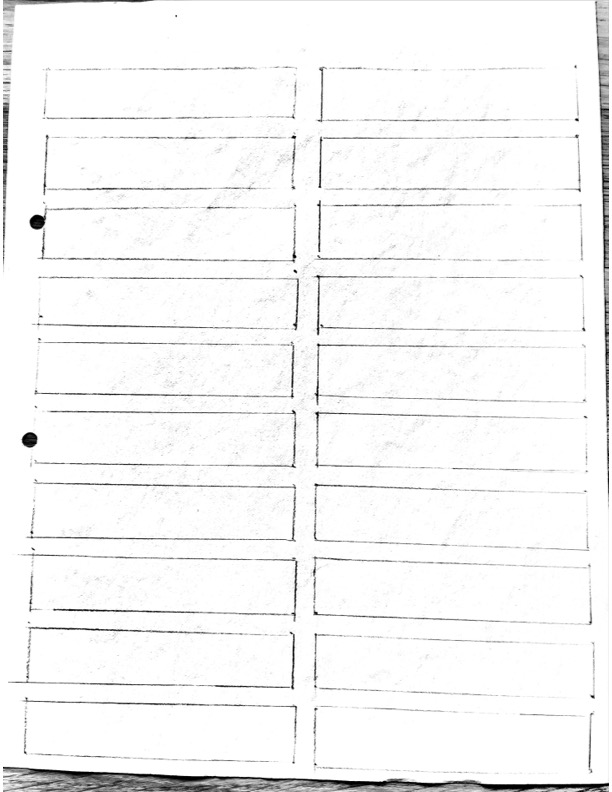
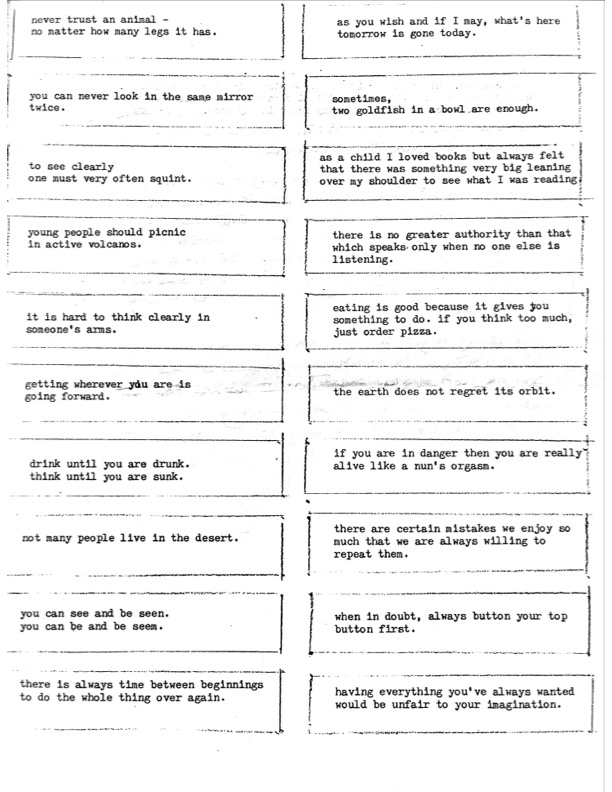
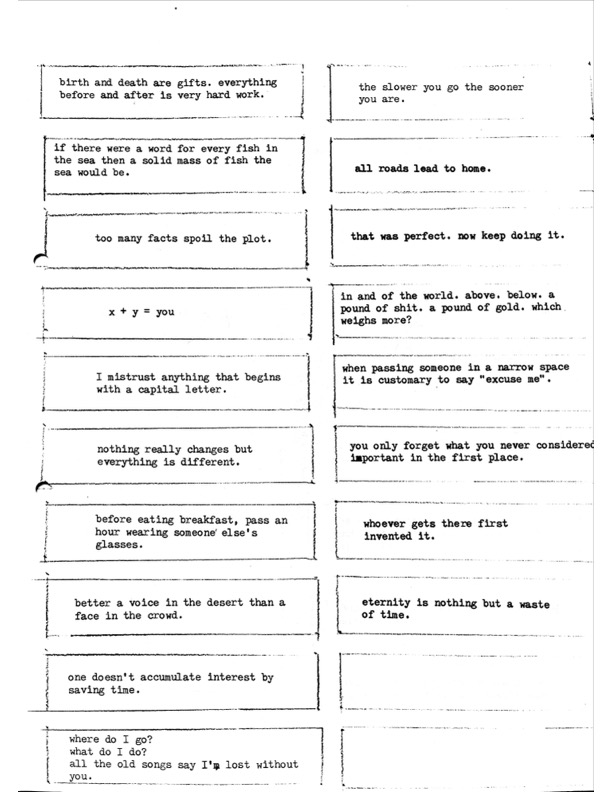
To make my fortunes, I typed all my aphorisms into two narrow columns on a standard sheet of letter paper. Then I made a couple dozen photocopies of this page and cut them up so that each aphorism was on its own rectangular strip. I stuffed these into an envelope and handed it to the man who always seemed to be standing in the doorway of Golden Gate Fortune Cookies smoking a cigarette. He, in turn, handed it to one of the two women. I then sat and watched as my fortune cookies were made.

I recently came across the sheets I used for my fortunes. Here is a photograph of the blank sheet onto which I typed my fortunes:


Each woman sat before an enormous black iron wheel, which looked like it had just fallen off a steam locomotive. The wheel, which rotated very slowly, was laid flat like a table, and its circumference was stippled with small depressions about the size of a Petri dish. As each depression came into position under a thin metal funnel, a dollop of dough squirted into it. The wheel then entered what looked like a model railway tunnel but was actually an oven, and by the time it emerged from the other side about thirty seconds later, the dough was baked into a miniature pancake, golden brown and steaming.

The women skewered each doughy medallion with a stick and lifted it from the wheel. Grabbing a fortune from a nearby tray, they swiftly inserted the aphorism into the soft, warm dough, deftly folded the cookie around it into its final croissant-like shape, and tossed it into a basket to cool. After about forty-five minutes, I walked away with one hundred of my own freshly baked fortune cookies, which I dropped into my trusty globe for distribution at the poetry performances I was giving at the time.

Here is a photograph of a sheet with my aphorisms on it:


And here is another sheet with my aphorisms and two aphorisms from my friend Alice Eckles:

If there were a word for every fish in the sea then a solid mass of fish the sea would be.

The slower you go the sooner you are.


At my current talks about aphorisms, I still pass around a globe and ask people to pick from it a slip with an aphorism on it. Fortune cookies not included, alas.

This Week in The World in A Phrase IV

Thanks to Callum and Maddie at the amazing Pints of Knowledge for hosting me and The World in A Phrase on January 28. And thanks to all the incredibly engaged folks who came out to Soho Comedy House to juggle words, ideas, and balls.

There was a blank sheet selected from the globe — once again, the first slip of paper chosen — and the topic was “technology”. With AI in mind, I managed to come up with this by British scientist Alfred North Whitehead:

Civilization advances by extending the number of important operations which we can perform without thinking of them

though I could have also shared this by science fiction writer Arthur C. Clarke, but I didn’t think of it until afterwards (l’esprit de l’escalier strikes again):

Any sufficiently advanced technology is indistinguishable from magic

which now also reminds me of Theodor W. Adorno’s classic:

Art is magic delivered from the lie of being truth.

This Behavioral Grooves episode about aphorisms is available on Spotify, Apple, and in glorious living color on YouTube. Thanks to groovy hosts Tim Houlihan and Kurt Nelson for a conversation covering everything from fortune cookies to cognitive heuristics.

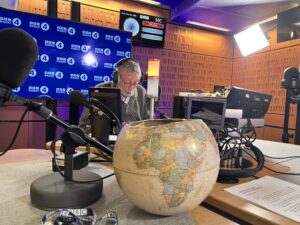
And check out my conversation about aphorisms with legendary broadcaster and author Michael Rosen on BBC 4’s wonderful Word of Mouth program. For a blast from the past, revisit this December 2, 2005 Word of Mouth conversation with Michael Rosen about the same subject, broadcast when original edition of The World in A Phrase (then known as We Are What We Think in the UK) came out.